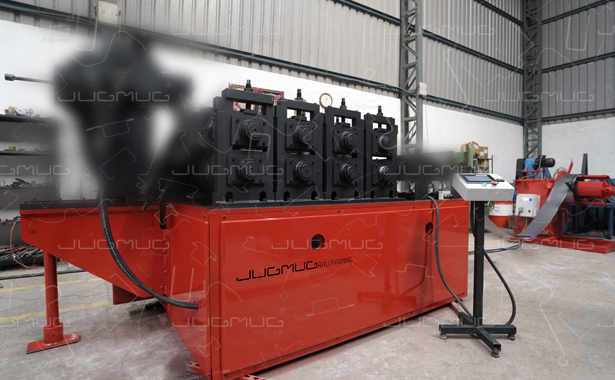
Investing in a C-channel roll-forming machine is a significant milestone for any manufacturing business owner. It changes your operations by letting you control your own production line so the margins boost and the lead times slash.
However, a roll forming line is not an appliance that is apt for every business and every requirement. It is a highly engineered, capital-intensive system. Making the wrong choice can lead to material waste, chronic downtime, or an inability to produce the profiles your clients actually need.
Before you decide on a C channel machine, here is an essential checklist of what to evaluate to ensure you get the highest return on investment.
1. Material Specifications and Compatibility
A roll forming machine is only as good as its compatibility with the raw materials you plan to feed into it. You must develop an understanding of the parameters of the metal coils.
Material Type: Are you using materials like aluminium, galvanised steel, or copper in your manufacturing process? Different materials have different properties, and this can affect the tooling design.
Thickness and Width: Ensure with the roll forming machine manufacturers in India that the machine can handle both your maximum and minimum thickness ranges. If you try to run material that is too thick, it will put strain on the motors and damage the rollers, while material that is too thin might slip easily.
Yield Strength: Heavier frames and more forming stations are required for high-strength material to accurately shape it without machine damage.
2. Number of Forming Stations (Passes)
The number of roll stations, the individual pairs of rollers that progressively bend the metal, is the single most important factor determining profile quality.
If a manufacturer tries to save money by offering a C-channel roll-forming machine with too few stations, the metal will be bent too aggressively at each step. This causes “oil canning” (wavy distortions), twisted profiles, or cracked coatings. Complex profiles with multiple deep bends require a higher number of forming passes to gently graduate the metal into its final shape. Don’t compromise on the station count just to lower the upfront price.
3. Tooling Material and Quality
The rollers themselves do the heavy lifting. They are subjected to immense friction and pressure over thousands of hours of operation.
You must ask the manufacturer for the type of material being used for the tooling of the C channel machine. Hardened tool steel is usually used for high-quality rollers and is CNC-machined and chrome-plated. Chrome plating protects the rollers from wear and prevents scratching from happening that may damage metal surfaces during production.
4. Drive and Power Systems
The drive system determines the machine’s reliability and consistency of speed. Broadly, you will choose between two major setups while taking guidance from roll forming machine manufacturers:
Chain Drives: Chain drives are economical for materials with a lighter gauge. Regular lubrication is required with tension adjustments, while these are simple to maintain.
Gearbox or Coupling Drives: These types of drives are the best for heavy-duty profiles, thick materials, and high-speed production. They offer smooth power transmission and less backlash while requiring less maintenance.
Additionally, you must check the motor horsepower and hydraulic system capacity of the C channel roll forming machine to ensure continuous production is possible without the possibility of overheating.
5. Line Speed and Automation Options
How many linear feet per minute do you realistically need to produce to meet your business targets?
You must consider the cutting and punching methods of the machine:
- Pre-cut vs. Post-cut: Post-cut systems usually offer higher production speeds and cleaner edges, but complex tooling might also be required.
- Control Systems: Look for a C-channel machine that has reliable PLCs from reputed brands. A user-friendly touchscreen lets operators easily input different batch lengths and quantities while minimizing human errors.
6. Machine Configuration: Fixed vs. Rafted vs. Duplex
If you plan to invest in only one profile for the next decade, a standard fixed-station machine is perfect. However, if your business requires flexibility, look into advanced configurations:
- Rafted Systems: The forming stations sit on removable “rafts” or cassettes. Within an hour, you can lift out one entire tooling set and drop in another, which makes profile switching seamless.
- Duplex Machines: These allow automatic profile width adjustment via the control panel, which is useful for products like C and Z purlins.
7. Manufacturer After-Sales Support
A roll forming machine is a long-term asset, and you ought to take advice from the best roll forming machine manufacturers. No doubt, you will need replacement parts, tooling adjustments, or some other kind of support.
Before purchasing, you must check for the manufacturer’s reputation. Do they offer remote technical diagnosis for the machine they are selling? Is it easy for the manufacturer to ship the replacement rollers or hydraulic valves? You are inviting trouble if you choose a cheaper machine from an unverified supplier, who can leave you helpless during a technical breakdown.
Final Action Tip
Always request a live factory acceptance test (FAT) using your own material coils before the machine ships. Witnessing the machine run your exact specification is the ultimate confirmation that your investment will perform flawlessly on day one.